

Exoskeleton Assistance, Upgrading Workforce Efficiency
Carrying More Than a Bag of Rice — It’s a Safer Way to Work
Preface|Bringing Technology to the Frontline
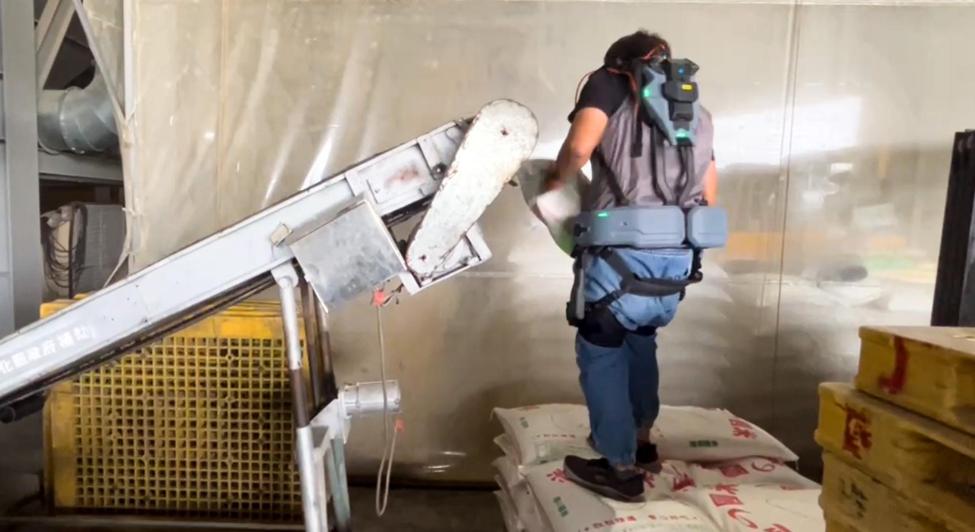
To address the risks of muscle fatigue and occupational injuries caused by lifting, bending, and repeatedly handling heavy loads in agricultural processing sites, we were invited to a local rice mill to conduct an on-site demonstration and hands-on experience of industrial-grade exoskeletons. Through real-world operation, we aim to let users personally experience how technology can help reduce physical strain while improving work efficiency.
Key Points|Testing Based on Real Workflows
- Wearing Experience Test: On-site workers wore the exoskeleton to perform tasks such as bending, lifting, and carrying rice bags.
- Load Reduction Demonstration: Showcased how the exoskeleton significantly reduces pressure on the lower back and shoulders.
- Operational Safety Instructions: Demonstrated equipment activation, adjustment, removal, and key safety precautions.
- Comparison of Work Scenarios: Highlighted differences between stationary workstations and mobile handling applications.
Results|Positive On-Site Feedback and Noticeable User Improvement
- After the trial, operators shared that “bending feels much easier” and “my lower back doesn’t feel as tight after carrying rice bags for a long time.”
- Supervisors gave positive feedback, recognizing the exoskeleton’s ability to reduce worker fatigue and enhance workplace safety.
- Through on-site testing, we collected real data on users’ body types, handling habits, and workload, enabling more precise adjustments for future optimization.
Outlook|Upgrading Industrial Workforce for a Safer Workplace
In the future, we aim to introduce wearable assistive devices to more agricultural processing and food manufacturing sites, gradually building a more efficient, less strenuous, and lower-risk work environment—where technology truly supports frontline workers.