

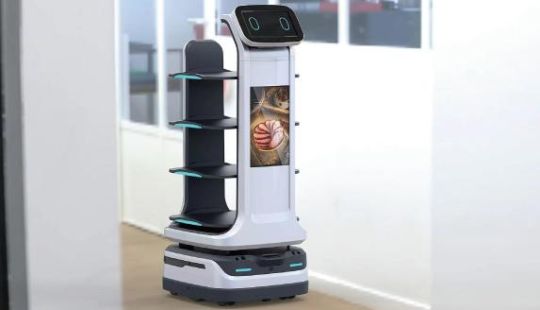
Powering Smart Services with AI
AI-Powered Autonomous Navigation × Intelligent Interaction × Versatile Applications
Designed to deliver smarter, safer, and more efficient service experiences for hotels, restaurants, shopping malls, office buildings, and public spaces.
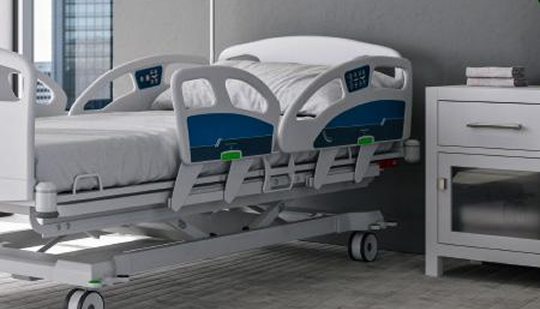
Empowering Workers with Exoskeleton Assistance
Designed for caregivers assisting older adults with mobility limitations during repositioning and transfers, the device can be easily put on and taken off without assistance.
In 2023, people aged 65 and above accounted for approximately 15% of the total population. Population aging has created challenges for healthcare services, chronic disease rehabilitation, long-term care, and economic security. Nursing homes accommodate a large number of older adults, where caregivers often need to support multiple residents simultaneously. Many residents have disabilities or mobility limitations and require assistance with standing up, repositioning, transfers, getting out of bed, and rehabilitation exercises. As a result, caregivers are frequently required to perform repetitive bending, lifting, and transfer tasks over extended periods, leading to significant physical strain.
Combining ergonomic design with advanced mechanical assist technology, the exoskeleton provides reliable support to help reduce physical strain during lifting, material handling, overhead work, and repetitive tasks. By relieving muscle fatigue in the shoulders, arms, and lower back, it enhances operator comfort, improves productivity, and helps create a safer, healthier, and more efficient workplace.
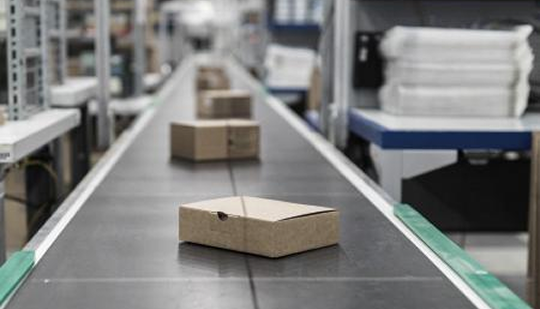
Automation & Human–Robot Collaboration
By comparing intelligent delivery robots and powered exoskeletons, their value in industrial applications can be explored from two key perspectives: automation efficiency and human–robot collaboration.